

Why Coastal GasLink
Coastal GasLink is Canada’s first direct pathway to global LNG export markets. It is a 670-kilometre (416-mile) natural gas pipeline that safely delivers 2.1 Bcf/d of natural gas from northeastern British Columbia to the LNG Canada facility in Kitimat, B.C., where it is liquefied for export to global markets. The infrastructure is owned by Coastal GasLink Pipeline Limited Partnership, with TC Energy as the operator, holding a 35 per cent ownership interest.
The Coastal GasLink pipeline carries a legacy as nation-building energy infrastructure through its local and national economic impact and vital role in connecting Canadian natural gas to global markets and supporting access to lower-emissions energy. Together with LNG Canada, Coastal GasLink helps meet growing global energy demand while strengthening Canada’s role as a reliable energy supplier.
Coastal GasLink has been built on a foundation of strong partnerships with Indigenous and local communities across British Columbia, and continues to create economic opportunities, jobs and long-term benefits in the regions where it operates.
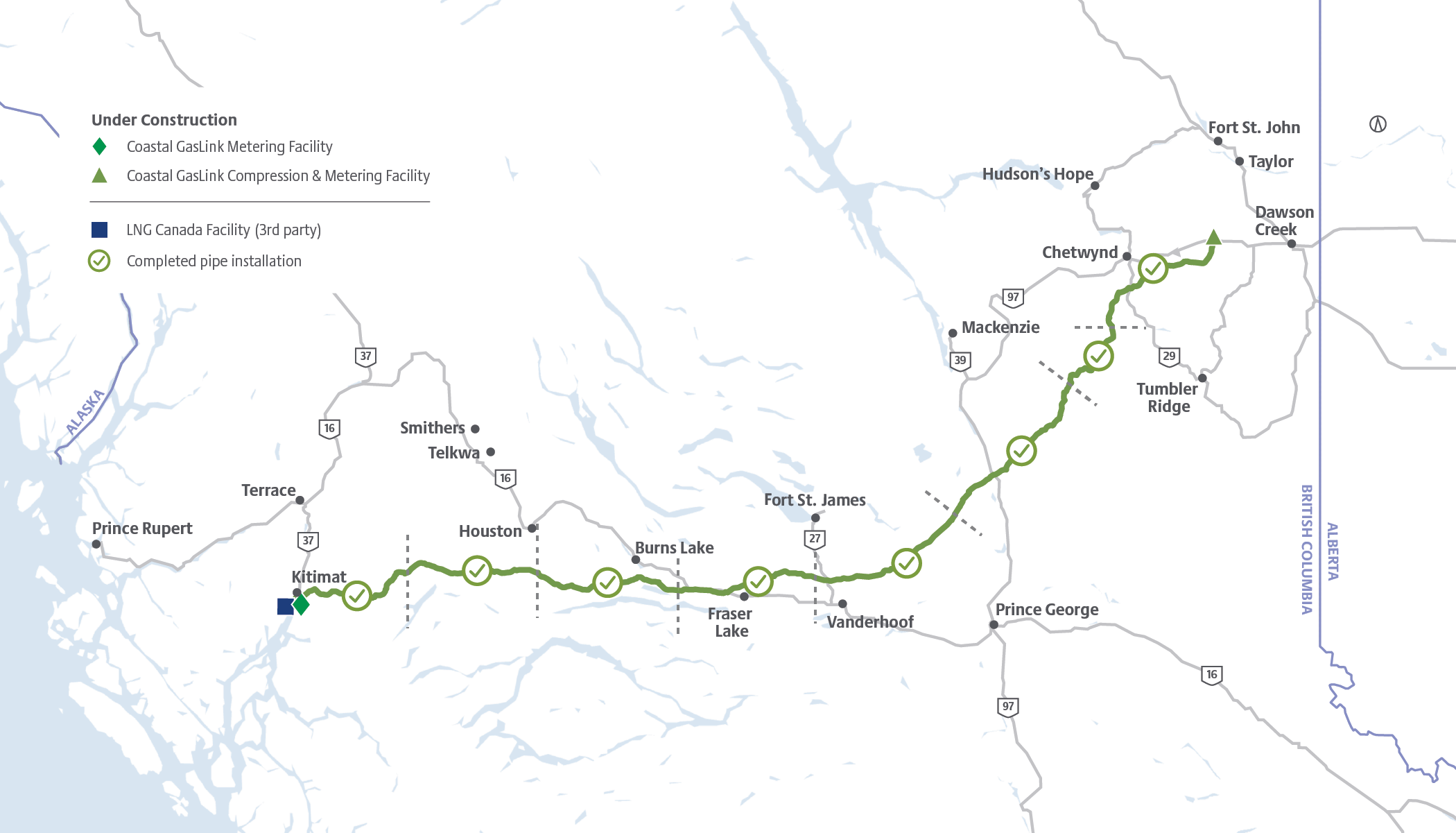
Explore our route
We are focused on final clean-up and reclamation activities across the right-of-way.
Liquefied Natural Gas (LNG) 101
Liquefied natural gas (LNG) is natural gas that has been cooled into a liquid state, making it easier to store and transport to global markets. LNG is safe to transport—it is non-explosive, non-toxic and non-corrosive, and it does not mix with water or soil. If exposed to air, it quickly vaporizes with no harmful residue left behind. Once it reaches its destination, LNG is converted back into gas for energy use.
LNG plays an important role in balancing global energy security, reliability, affordability and emissions reduction. As a cleaner-burning, lower-carbon fuel than coal, it provides a dependable source of energy while helping reduce overall emissions.
About TC Energy
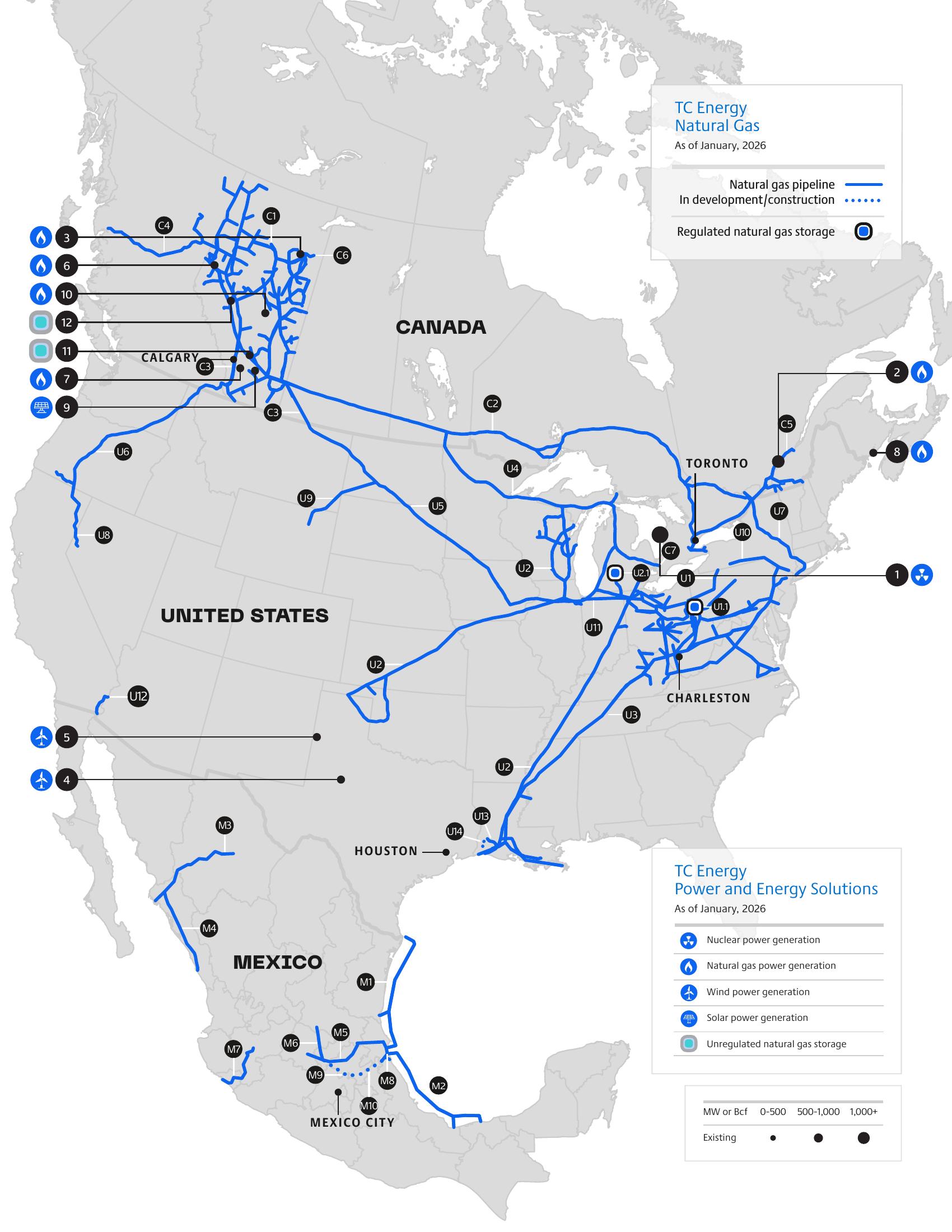
We are a leader in North American energy infrastructure, spanning Canada, the U.S. and Mexico. For over 75 years, we have proudly connected the world to the energy it needs. Every day, we move more than 30 per cent of the natural gas used across the continent and connect LNG exports to global markets — powering communities and industries. Complemented by strategic ownership and low-risk investments in power generation, our infrastructure delivers affordable, reliable and sustainable energy across North America.
We carry forward a legacy of nation‑building energy infrastructure and strong partnerships. By working with communities, businesses and leaders across our extensive energy network, we create opportunities today and for generations to come.
TC Energy’s common shares trade on the Toronto (TSX) and New York (NYSE) stock exchanges under the symbol TRP. To learn more, visit us at TCEnergy.com.
Why invest in TC Energy?
- Track record of delivering long-term shareholder value
- Attractive, growing dividend
- Strong financial position
- Diversified high-quality assets