
Phase 2
Project overview
Coastal GasLink created an extraordinary legacy as Canada’s first direct path to global LNG markets. Building on that legacy, Phase 2 maximizes the full potential of the existing pipeline without adding new pipe.
Phase 2 nearly doubles the amount of natural gas that can move through the existing Coastal GasLink pipeline. It does this by adding five compressor stations and upgrading facilities along the current route. By making greater use of infrastructure already in place, Phase 2 creates additional capacity while minimizing additional disturbance. Phase 2 builds on the relationships, commitments and partnerships established through the original development of Coastal GasLink.
An extraordinary legacy. A more connected energy future.
Phase 2 is designed to create opportunities for Indigenous and local communities through employment, procurement, skills development and long-term participation in project-related economic activity. By connecting people and businesses to these opportunities, the project helps support a legacy of shared prosperity that extends beyond construction and benefits future generations.
Indigenous participation
Indigenous Communities have played a key role in shaping the project from the beginning, and that will continue through Phase 2.
The Indigenous Construction Monitoring Program and Community and Culture Program will be utilized to include Indigenous participation and perspectives through Phase 2 construction.
Hire & buy local
Through our Hire & Buy Local approach, Phase 2 prioritizes employment, contracting and procurement opportunities for communities closest to the project. By helping local workers, businesses and suppliers participate directly in project benefits, the program supports strong families, thriving businesses and resilient local economies.
Skills and community capacity
Investing in training and workforce development helps build skills that can create opportunities long after construction is complete. By supporting workforce readiness, career development and local capacity, Phase 2 helps communities benefit from both immediate and future opportunities.
Lasting community benefits
Phase 2 builds on long-standing relationships with Indigenous and local communities to support outcomes that matter most to them. Through ongoing collaboration and community-led initiatives, the project aims to create lasting benefits that contribute to long-term prosperity, resilience and community well-being.
Project Details
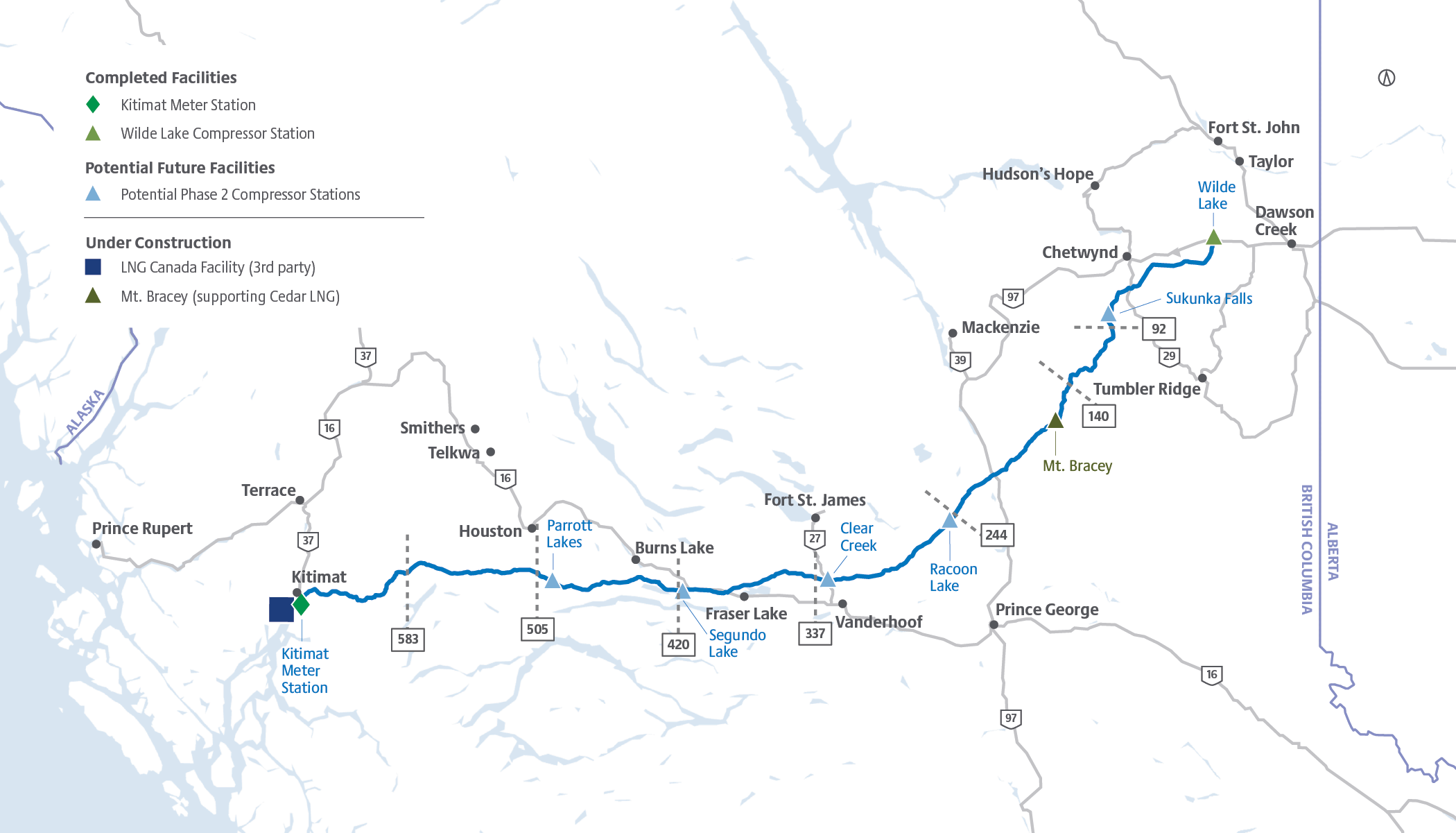
CGL Phase 2 will increase the system capacity by adding five additional compressor stations. The project involves the construction and operation of:
- Additional compressor stations located at regular intervals along the existing pipeline route.
- Sukunka Falls Compressor Station
- Racoon Lake Compressor Station
- Clear Creek Compressor Station
- Segundo Lake Compressor Station
- Parrott Lakes Compressor Station
- Modifications at existing facilities:
- Wilde Lake Compressor Station – additional cooler bay
- Wilde Lake Meter Stations – additional meter runs
- Kitimat Meter Station – additional separator and piping within the existing station
- LNG Link Meter Station– additional meter run, associated building and piping
- Additional infrastructure or facilities to support operational needs:
We expect construction to start early in 2027, with compressor stations construction advancing in stages, as planning and permitting progress. We will share more about employment and contracting opportunities and construction timing in the coming weeks and months.
Safety & environmental stewardship
Safety and environmental responsibility are part of every decision we make, from planning and construction, through long-term operations. Phase 2 builds on existing infrastructure while maintaining high environmental and safety standards and taking a responsible approach to project development.
To learn more about our approach to safe operations, construction and sustainability, visit:
Timeline
2012
LNG Canada selects Coastal GasLink; our ongoing engagement process begins, followed by environmental and engineering studies
2014
B.C. Environmental Assessment Office (EAO) issues EAC for Coastal GasLink Project, including potential future facilities
2018
EAO issues amendment to EAC for proposed alternate routing (May 2018)
Coastal GasLink final investment decision (FID) (October 2018)
2019
B.C Oil & Gas Commission (B.C.OGC) issues amendment to Pipeline Permit for proposed alternate routing (May 2019)
2020-2023
Pipelines and facilities construction; mechanical completion of Phase 1 of Coastal GasLink (Nov 2023); engagement with Indigenous groups, landowners and local communities; filing of Phase 2 regulatory applications
2024-2025
Continued engagement and filing of permit applications; Phase 2 design engineering and pre-construction planning
2026
Final Investment decisions (October).
2027
Phase 2 construction begins in early 2027
2030's
Anticipated in-service
Working together to build Phase 2
Phase 2 will be delivered through an integrated execution model involving LNG Canada and Coastal GasLink.
LNG Canada will lead project construction as Phase 2 Execution Manager, while Coastal GasLink remains the owner, operator and permit holder of the pipeline and associated facilities.
Coastal GasLink and TC Energy will provide technical advisory, procurement and operational expertise to support project delivery.
Learn more on the execution model here: Coastal GasLink Phase 2 advances step forward with new commercial agreements .
Construction updates
We expect construction to start early in 2027, with compressor stations construction advancing in stages, as planning and permitting progress. We will share more about employment and contracting opportunities and construction timing in the coming weeks and months.
